
In the kitchen
How to Cook Lobster Tails
Thaw the tails completely, choose your method, and cook the thickest meat to 145°F. Boil for a simple stovetop meal, broil for a browned, buttered top, or follow the baking, steaming and grilling instructions below.
Choose your cooking method ↓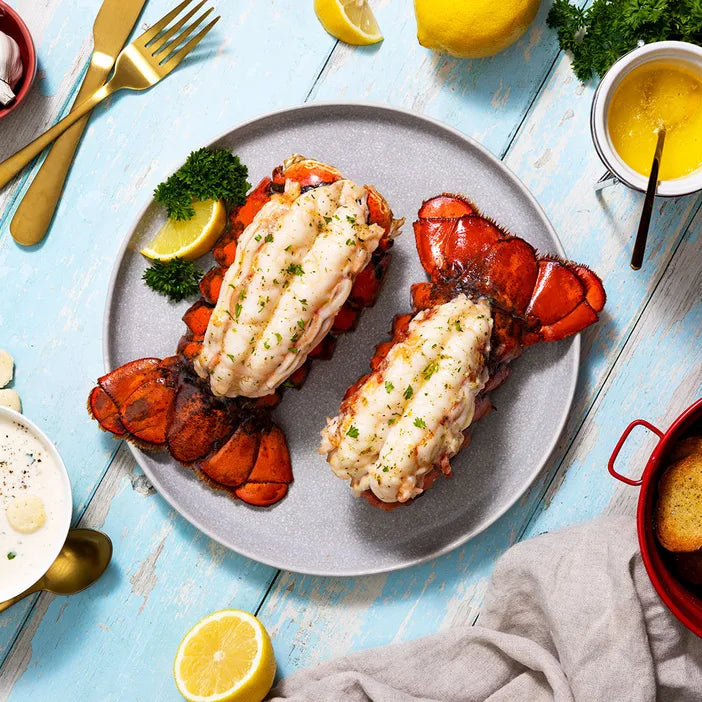
Fully thawedThe center should be flexible and free of ice.
145°F in the meatMeasure the thickest part, away from the shell.
Size + cut + heatAll three affect your cooking time.
Start here
Which cooking method should you use?
Choose the finish you want, then follow that method’s preparation and timing. There is no single cooking time that works for every tail.
| Method | Choose it for | Prepare the tail |
|---|---|---|
| Boil | Simple stovetop cooking; butter on the side | Shell intact |
| Steam | Cooking above water in a covered pot | Split lengthwise for this method |
| Bake | Oven cooking with seasoned, exposed meat | Butterfly |
| Broil | A lightly browned top | Butterfly |
| Grill | Outdoor cooking and grill marks | Split lengthwise into halves |
Before you start
Thaw and prepare your lobster tails
Thaw frozen tails on a tray in the refrigerator. Smaller tails often thaw overnight; large tails can need longer. Follow the package directions, including any instructions for opening vacuum packaging.
For quicker thawing, put the tails in a leakproof bag in cold water. Change the water every 30 minutes and cook promptly once thawed. Keep them off the counter and out of hot water.
Have kitchen shears, tongs and an instant-read thermometer ready. Pat the tails dry. Use tails of similar sizes, or remove smaller ones as they finish.
For buying, portions and storage, use our Lobster Field Guide.

Cooking a whole lobster instead? Use our live-lobster cooking guide.
Prepare for baking or broiling
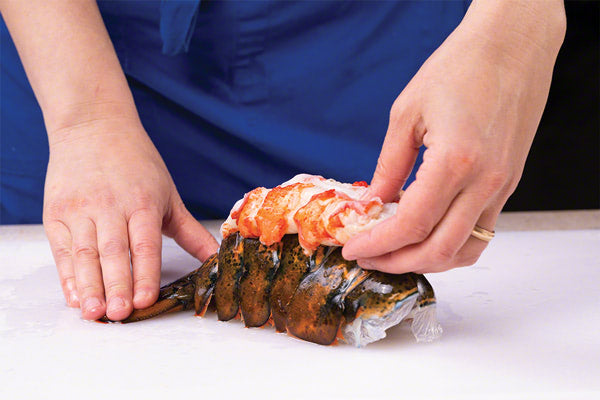
How to butterfly a lobster tail
- Cut the rounded top shell down its center, stopping before the tail fan.
- Gently open the shell and loosen the meat from the sides and bottom. Leave it attached at the fan.
- Lift the meat through the opening, close the shell underneath it, and rest the meat on top. Remove a dark vein or loose shell fragments if present.
boil
How to boil lobster tails
Preparation: thawed, shell intact · Heat: gently boiling water
- Bring the water to a boil. Use a pot that holds the tails comfortably and enough water to cover them. Add salt if you like.
- Lower in the tails. Use tongs. Cook similar sizes together and leave room for water to circulate.
- Start timing when the boil returns. For 4 oz. or about 7–8 oz. tails, use 6–8 minutes as a starting range. Check smaller tails sooner; larger tails can take longer.
- Check the center. Insert an instant-read thermometer into the thickest meat, avoiding the shell. Cook to 145°F with pearly, opaque meat throughout.
- Drain and serve. Let the tails cool enough to handle, open the shells with shears, and serve with butter and lemon.
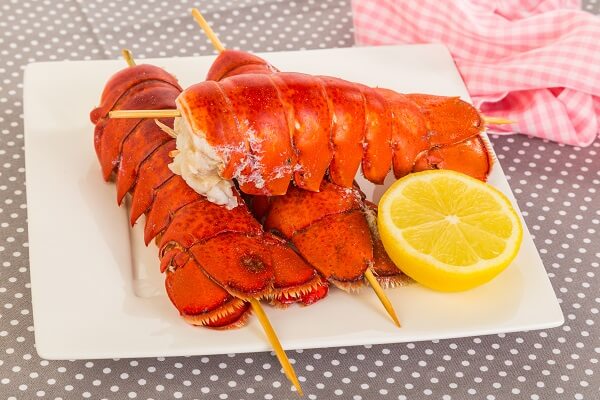
The 6–8-minute reference covers the two sizes above, not every tail weight. Measure individual tails rather than multiplying minutes by the number in the pot.
Watch our original boiling demonstration ↗ with Vanessa Seder.
↑ Back to method choicessteam
How to steam lobster tails
Preparation: thawed, split lengthwise · Heat: steady steam in a covered pot
- Set up the steamer. Add about an inch of water below the basket. The tails should sit above the water, not in it. Bring the water to a boil.
- Split the tails. On a stable cutting board, cut each thawed tail lengthwise into two halves. This is a different cut from lifting the meat onto its shell.
- Cover and steam. Arrange the halves in the basket without crowding. For split 4 oz. tails, begin checking at about 5 minutes; 5–6 minutes is a useful starting range.
- Check before serving. Cook the thickest meat to 145°F, with pearly, opaque flesh. Larger or intact tails need longer; do not apply this small, split-tail timing to them.

This method uses split tails. Our older video demonstrates another preparation; its timing should not be substituted for this one.
Watch our original steaming demonstration ↗ with Vanessa Seder.
↑ Back to method choicesbake
How to bake lobster tails
Preparation: thawed, butterflied · Oven: 425°F, middle rack
- Heat the oven to 425°F. Use the middle rack. Butterfly the thawed tails and set them meat-side up in a baking dish.
- Season the meat. Brush with melted butter or oil and add salt and pepper. Pour a shallow layer of water into the bottom of the dish without covering the exposed meat.
- Bake and begin checking early. Allow roughly 1–2 minutes per ounce of each tail as an estimate. For a 6 oz. tail, that means a broad 6–12-minute checking window—not a promise that it is done at 6 minutes.
- Finish by temperature. Keep baking until the thickest meat reaches 145°F and is pearly and opaque. Remove finished tails individually.

Use 425°F for this baking method. A different oven setting or preparation needs different timing. Start checking early, especially with large tails, and measure the center.
broil
How to broil lobster tails
Preparation: thawed, butterflied · Broiler: high, meat at least 6 inches from the element
- Position the rack first. Keep the exposed meat at least 6 inches below the heating element; use a lower rack for larger tails. Follow your oven’s broiler instructions.
- Butterfly and season. Put the tails meat-side up on a broiler-safe, foil-lined metal pan. Brush with melted butter and add salt and pepper. Do not use parchment under the broiler.
- Broil while watching closely. Use the size ranges below to plan, checking before the low end. If the top browns before the center cooks, move the pan farther from the heat.
- Check each tail. Remove it when the thickest meat reaches 145°F and the flesh is pearly and opaque. Serve right away.

| Weight of one tail | Approximate time |
|---|---|
| 3–4 oz. | 6–8 minutes |
| 5–6 oz. | 10–11 minutes |
| 7–9 oz. | 12–15 minutes |
Broilers vary. These ranges apply to the preparation and rack position above; they are not a universal “one minute per ounce” rule. Jumbo tails need separate temperature checks.
↑ Back to method choicesgrill
How to grill lobster tails
Preparation: thawed, split into halves · Grill: direct medium heat, 350–450°F
- Heat and clean the grill. Prepare direct medium heat. Keep a cooler area available if the outside browns too quickly.
- Split and season. Cut each tail lengthwise into two halves. Brush the exposed meat lightly with oil or melted butter and season with salt and pepper. Keep any serving butter separate from raw seafood.
- Start meat-side down. For 6–8 oz. tails split into halves, grill with the lid closed for about 2–3 minutes, until lightly marked. Watch for flare-ups.
- Turn shell-side down. Grill about 5–8 minutes more as a starting range. Check the thickest meat and continue until it reaches 145°F and is pearly and opaque.

The 7–11-minute total is for 6–8 oz. tails before splitting. It is not the timing for whole live lobsters, intact jumbo tails or butterflied tails sitting above their shells.
↑ Back to method choicesHow do you know lobster tails are done?
Put the thermometer probe into the thickest meat, without touching the shell. Check for 145°F and pearly, opaque flesh throughout. A red shell or a browned top can appear before the center is ready.
If the outside is ready first, reduce direct heat or move the lobster farther from it. Check each tail separately and remove it as soon as it is done.
Lobster-tail cooking questions
Can I cook lobster tails straight from frozen?
Thaw them first for the methods on this page. An icy center makes it harder to cut the shell and can leave the outside overcooked before the middle is ready.
Do I have to butterfly every lobster tail?
No. Leave shells intact for boiling. This steaming method uses halves; baking and broiling use butterflied tails. Grilling here uses lengthwise halves, which are a different preparation.
How long do jumbo lobster tails take?
Thickness, cut and cooking method matter as well as weight. Do not extend a small-tail chart blindly to 12–36 oz. tails. Thaw completely, expose the meat for oven cooking, and measure the thickest center. Keep cooking until it reaches 145°F with opaque flesh.
Does cooking several tails mean multiplying the time?
No. Use the size of each tail. A crowded pot, steamer or pan can slow cooking, so leave space and check tails individually.
Why did my lobster turn rubbery?
Overcooking is a common reason. Start checking before the estimated finish time, use a thermometer and remove finished tails promptly.
Is 165°F the cooking temperature for raw lobster?
This guide uses 145°F for raw lobster, with pearly, opaque meat. The 165°F guidance is for reheating leftovers, not the initial cooking target.
Ready for lobster night?
Choose the tail size that fits your meal, then come back to the method you want to cook.
Shop lobster tails