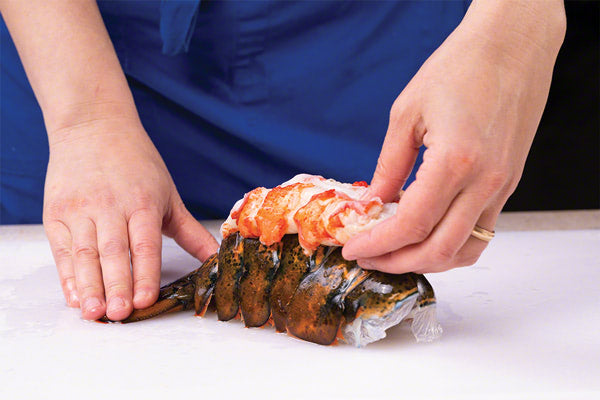
Learning how to butterfly a lobster tail takes only a few minutes and creates the restaurant-style presentation commonly used for broiled, baked, roasted, and grilled lobster tails. The basic technique is simple: cut the hard top shell, loosen the lobster meat, lift it through the opening, and rest it on top of the shell while keeping it attached at the tail fan.
Butterflying exposes more of the lobster meat, making it easier to season, monitor while cooking, and serve. All you need is a fully thawed lobster tail, a pair of sharp kitchen shears, a cutting board, and about five minutes.
Quick Answer: How to Butterfly a Lobster Tail
Cut down the center of the hard top shell with kitchen shears, stopping before the tail fan. Spread the shell slightly, loosen the lobster meat from the sides and bottom, and remove the dark vein if present. Lift the meat through the opening, bring the shell back together underneath it, and rest the meat on top before seasoning and cooking.
What Does It Mean to Butterfly a Lobster Tail?
Butterflying a lobster tail means cutting through the hard top shell, gently separating the lobster meat from the shell, and lifting the meat so it rests above the shell while remaining attached near the tail fan.
As the lobster cooks, the exposed meat firms up and creates the familiar presentation often seen at seafood restaurants. Butterflying also gives you direct access to the meat so you can brush it with butter and add seasonings before and during cooking.
Butterflying a lobster tail can help you:
- Season the exposed lobster meat directly
- Brush the meat with melted butter while it cooks
- Monitor the lobster meat more easily
- Create an attractive restaurant-style presentation
- Serve and eat the lobster tail more easily
What You Need Before You Start
- One or more fully thawed lobster tails
- Sharp kitchen shears or seafood shears
- A sturdy cutting board
- Paper towels
- Melted butter
- Your preferred lobster seasonings
Thaw the Lobster Tail Completely
Make sure the lobster tail is completely thawed before you begin. A frozen or partially frozen shell is more difficult to cut, and the meat will be harder to separate from the shell without tearing.
The easiest method is to thaw frozen lobster tails in the refrigerator overnight. For faster thawing, place the lobster tails in a sealed, leak-proof bag and submerge them in cold water. Change the water every 30 minutes and cook the lobster tails promptly after they have thawed.
Avoid thawing raw lobster tails on the counter or in hot water.
Use Sharp Kitchen Shears
Sharp kitchen or seafood shears provide better control than a knife when cutting through the curved lobster shell. The shell may have sharp edges, so use short, controlled snips and keep your fingers away from the path of the blades.
How to Butterfly a Lobster Tail in 5 Easy Steps
-
Cut Through the Top of the Shell
Place the lobster tail on the cutting board with the hard, rounded shell facing upward and the tail fan pointing away from you.
Starting at the open end of the tail, use kitchen shears to cut lengthwise through the center of the top shell. Follow the natural center line of the shell as you work toward the tail fan.
Stop cutting just before you reach the tail fan. Cut through the top shell only. Do not cut through the bottom shell or remove the tail fan.
-
Gently Spread the Shell Apart
Use your thumbs and fingers to gently open the two sides of the cut shell. Work slowly so you do not crack the shell or tear the lobster meat.
The lobster meat should now be visible through the opening. You only need to spread the shell enough to reach the meat with your fingers.
-
Loosen the Lobster Meat
Carefully slide your fingers between the lobster meat and the shell. Begin by loosening the meat from the sides, then work underneath it to separate it from the bottom of the shell.
Leave the meat attached at the base near the tail fan. This connection keeps the lobster tail together and creates the finished butterfly presentation.
If you notice a dark vein running along the top of the lobster meat, gently lift it away and discard it. Remove any loose pieces of shell and pat the meat dry with a paper towel.
-
Lift the Meat Through the Opening
Gently lift the loosened lobster meat upward through the opening in the shell. Do not pull the meat completely out or detach it from the tail fan.
Once the meat is above the shell, bring the two sides of the shell back together underneath it. Lay the lobster meat on top of the closed shell.
-
Season the Lobster Tail
Your lobster tail is now butterflied and ready to cook. Brush the exposed meat with melted butter and add your preferred seasonings.
Simple seasonings such as salt, black pepper, garlic, paprika, parsley, and fresh lemon complement lobster's naturally sweet flavor without overpowering it.
Watch: How to Butterfly a Lobster Tail
Watch the Maine Lobster Now preparation video below to see where to cut the shell, how to loosen the meat, and how the finished lobster tail should look.
Why Butterfly Lobster Tails?
You do not have to butterfly a lobster tail before cooking it, but this preparation method offers several advantages.
Better Presentation
A butterflied lobster tail places the meat above the shell, creating an impressive presentation for holidays, celebrations, date nights, seafood dinners, and special occasions.
Easier Seasoning
Because the lobster meat is exposed, you can brush butter and seasonings directly onto the surface before and during cooking.
Easier to Monitor While Cooking
The exposed meat makes it easier to watch the lobster as it cooks. You can see the meat change from translucent to pearly white and opaque.
Ideal for Broiling, Baking, Roasting, and Grilling
Butterflied lobster tails work especially well with cooking methods that expose the top of the meat to heat. The preparation is commonly used for broiling, baking, roasting, and grilling.
How to Cook a Butterflied Lobster Tail
After butterflying the lobster tail, brush the meat with melted butter and add your preferred seasonings. Choose a cooking method based on the meal you are preparing and the equipment available.
- Broil lobster tails for a lightly browned, restaurant-style finish.
- Bake lobster tails for a simple and dependable oven method.
- Roast lobster tails for another easy oven preparation.
- Grill lobster tails for a smoky flavor and summer cookout presentation.
Cooking time will depend on the size of the lobster tail and the method you choose. Avoid relying on shell color alone. Properly cooked lobster meat should appear pearly white and opaque rather than translucent.
For cooking temperatures, preparation methods, and timing by tail size, follow our complete guide to cooking lobster tails.
How to Season a Butterflied Lobster Tail
High-quality lobster does not require complicated seasoning. Melted butter, salt, and fresh lemon may be all you need.
Additional seasoning options include:
- Garlic butter
- Lemon and parsley
- Smoked or sweet paprika
- Cajun seasoning
- Fresh chives, thyme, or dill
- A small amount of chili seasoning
Brush seasonings over the exposed meat rather than filling the shell with excessive butter. The goal is to complement the lobster's sweet flavor, not cover it.
Common Mistakes When Butterflying Lobster Tails
| Common Problem | How to Avoid or Fix It |
|---|---|
| The tail is still partially frozen | Stop and finish thawing it. A fully thawed tail is easier to cut and shape. |
| The shell cracks while cutting | Use sharper kitchen shears and make short, controlled snips down the center of the shell. |
| The meat begins to tear | Loosen the meat more gradually from the sides and bottom instead of pulling upward with force. |
| The meat comes completely out | Leave the meat attached at the base near the tail fan. This connection holds the presentation together. |
| The tail fan gets cut | Stop cutting before the kitchen shears reach the fan. The fan and bottom shell should remain intact. |
| The cooked lobster is dry or rubbery | Use the appropriate cooking time for the tail size and stop cooking when the meat is pearly white and opaque. |
What to Serve With Butterflied Lobster Tails
Butterflied lobster tails can be the centerpiece of an easy seafood dinner or a larger celebration meal.
Popular lobster tail side dishes include:
- Corn on the cob
- Roasted, baked, or boiled potatoes
- Fresh garden salad
- Grilled or roasted vegetables
- Steamed clams or mussels
- Macaroni and cheese
- Crusty bread
- New England clam chowder
For a more substantial meal, pair lobster tails with filet mignon or ribeye for a classic surf-and-turf dinner. For more serving inspiration, explore our complete guide to the best lobster side dishes.
Frequently Asked Questions About Butterflying Lobster Tails
Which Side of a Lobster Tail Do You Cut?
Cut through the hard, rounded top shell of the lobster tail. Start at the open end and cut toward the tail fan, stopping before you reach it.
Do You Cut the Lobster Meat When Butterflying the Tail?
Your initial cut should go through the top shell. Avoid cutting deeply into the lobster meat. After opening the shell, use your fingers to loosen the meat from the sides and bottom.
Do You Cut All the Way Through a Lobster Tail?
No. Cut through the top shell, but do not cut through the bottom shell or tail fan. The lobster meat should also remain attached near the tail fan.
Do You Butterfly a Lobster Tail Before or After Cooking?
Butterfly the lobster tail before cooking it. Preparing the tail first exposes the meat so you can season it and monitor it while it cooks.
Can You Butterfly a Frozen Lobster Tail?
Thaw the lobster tail completely before butterflying it. A frozen or partially frozen tail is more difficult to cut, and the meat may tear when you try to separate it from the shell.
Do You Have to Butterfly Lobster Tails?
No. Lobster tails can be cooked without butterflying them. Butterflying is especially helpful for presentation, seasoning, and cooking methods such as broiling, baking, roasting, and grilling.
Do You Need to Butterfly a Lobster Tail Before Boiling It?
No. Butterflying is generally unnecessary when boiling lobster tails. You can leave the shell intact and follow the appropriate boiling time for the size of the tail.
Can You Prepare Butterflied Lobster Tails Ahead of Time?
Yes. You can butterfly the lobster tails before you are ready to cook them. Keep the prepared tails covered and refrigerated until cooking time. Do not leave raw lobster at room temperature.
How Do You Know When a Butterflied Lobster Tail Is Done?
The lobster meat should change from translucent to pearly white and opaque. Cooking time varies by tail size and cooking method, so follow a method designed for the specific size of your lobster tails.
Start With High-Quality Lobster Tails
Once you know how to butterfly a lobster tail, the process is easy to repeat: cut the top shell, loosen the meat, lift it over the shell, season it, and cook it using your preferred method.
Maine Lobster Now makes it easy to order lobster tails delivered directly to your door for holidays, special occasions, surf-and-turf dinners, backyard cookouts, and seafood meals at home.