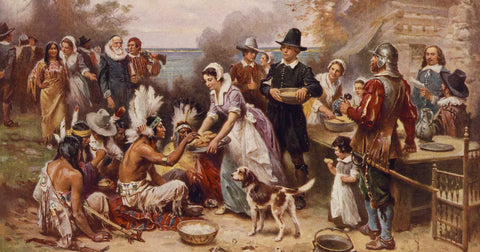
The 1621 harvest gathering at Plymouth did not come with a complete surviving menu. The clearest written evidence names venison and wildfowl. Other foods are possibilities based on what people grew, gathered, hunted and fished in the region.
What is documented?
Edward Winslow’s account describes a gathering involving English colonists and Wampanoag people, including Ousamequin, also known as Massasoit. It records five deer brought by the Wampanoag and birds obtained by the colonists. It does not identify every dish or explain every preparation.
Was lobster served at the first Thanksgiving?
Lobster and other seafood were available locally, but availability is not proof that a particular dish appeared at that gathering. Fish and shellfish were part of regional diets. clams, mussels and fresh lobster can illustrate that coastal food tradition, without treating today’s product selection as a record of the 1621 meal.
Other possible foods
Corn, beans, squash, seasonal produce and nuts help historians consider what else might have been prepared. The exact dishes remain uncertain. A modern Thanksgiving plate with mashed potatoes, sweet cranberry sauce and pumpkin pie should not be read back into the historical record.
Plimoth Patuxet Museums’ food-history research explains both the evidence and its limits.
A coastal Thanksgiving menu today
You do not need to recreate an uncertain historical menu to serve a New England holiday meal. Start with your family’s traditions and add one seafood dish that fits the rest of the dinner.
- Serve steamed clams as an appetizer with lemon and bread.
- Share mussels before the main course, keeping the seasoning simple.
- Make fresh lobster the centerpiece for guests who prefer a seafood dinner.
Check portions, storage needs and delivery dates before ordering. These are modern menu ideas, separate from what can be established about the 1621 gathering.