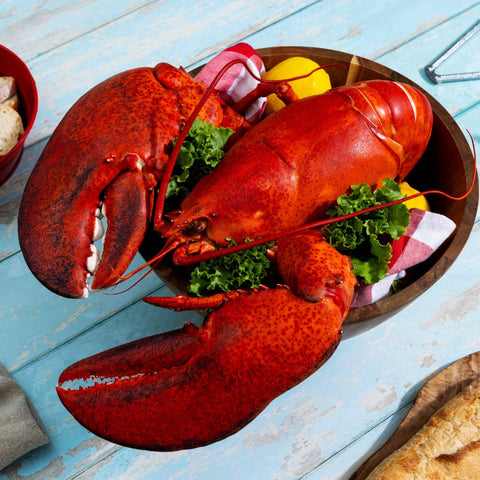

Frozen lobster is easier to use when you first identify what is in the package: raw tails, raw meat, or cooked meat. Those products need different preparation. Follow the label for the product you have rather than applying one cooking method to every frozen lobster item.
Store it frozen
Keep frozen lobster at 0°F or below and protect it from air exposure with intact freezer packaging. Use the supplier’s recommended quality window rather than assuming every lobster product keeps its best texture for the same number of months. Freezing preserves food; it does not make previously mishandled seafood safe.
Thaw in the refrigerator
Place the package in a leakproof tray in a refrigerator at 40°F or below. Allow enough time for its size and thickness. Follow all vacuum-package instructions, including removing the seafood from that packaging before thawing when directed.
For a faster method, FDA guidance permits thawing seafood in a sealed bag in cold water; cook it immediately afterward. Do not thaw on the counter or in warm water. A routine period at room temperature before cooking is unnecessary.
Raw lobster needs cooking
For raw tails, use our lobster-tail cooking guide. Timing changes with tail size and method, so use the cooking endpoint as well as the recipe’s estimated time. Raw seafood should reach the appropriate safe temperature; the commonly recommended endpoint for lobster is 145°F.
Cooked meat needs a gentler approach
Check whether your frozen lobster meat is labeled fully cooked. Thawed ready-to-eat meat can be used as directed in a chilled preparation, or added near the end of a hot recipe. Do not automatically repeat the cooking time for raw lobster. Reheat cooked leftovers to 165°F.
Can you refreeze it?
USDA guidance allows food safely thawed in the refrigerator to be refrozen, although texture can suffer. Food thawed by other methods should be cooked before refreezing. If the lobster has been held at an unsafe temperature, refreezing will not solve that problem.
Source: USDA freezing and thawing guidance. Reviewed September 22, 2026.
Source: FoodSafety.gov cooking-temperature chart. Reviewed September 22, 2026.