
A Maine lobster dinner
How to Cook Live Lobsters
Boil or steam whole live lobsters in a pot with room to circulate heat. Choose a time based on each lobster’s weight, then check the thickest tail and claw meat for 145°F and a pearly, opaque appearance before serving.
Find your cooking time ↓
Cook on arrival dayKeep live lobsters cool, damp and ventilated.
Use individual weightDo not multiply the time by the lobster count.
Check tail + clawsThe red shell alone is not a doneness test.
Quick reference
How long do you cook a live lobster?
Match the weight of one lobster to your method. Boiling and steaming use different times. Start checking before the estimated finish and let the meat determine when the lobster is ready.
| Weight of one lobster | Boil¹ | Steam² |
|---|---|---|
| 1 lb. | 8–10 minutes | About 10 minutes |
| 1¼ lb. | 9–10 minutes | About 12 minutes |
| 1½ lb. | 10–12 minutes | About 14 minutes |
| 2 lb. | 14–16 minutes | About 18 minutes |
| 2½ lb. | 15–18 minutes | About 22 minutes |
| 3 lb. | 18–22 minutes | About 25–30 minutes |
¹ MLN boiling estimates: start timing when the water returns to a boil. ² Maine Lobster Marketing Collaborative steaming reference: time from adding the lobsters and covering a pot already producing steam. If heat recovery is slow, additional time may be needed. These are estimates, not substitutes for checking the meat.
Cooking a jumbo lobster? Check the jumbo instructions. Tail and claws may finish at different times; do not extend a small-lobster chart blindly.
Get your kitchen and lobsters ready
Open your delivery promptly, confirm the lobsters are alive and plan to cook them the day they arrive. Keep them cool, damp and ventilated. Read our live-lobster handling and storage guide for arrival-day care.
Cold lobsters may move less. If one appears unresponsive, take photos and contact customer support promptly before cooking it.
Gather a large pot, a lid and steaming rack if needed, tongs, an instant-read thermometer, a clean tray and cracking tools. Give the lobsters room; cook in batches if your pot is crowded.
Keep fingers clear of claws and sharp shell edges. Use tongs when adding or removing lobsters from the hot pot.

boil
How to boil live lobsters
Preparation: whole live lobster · Start the timer: when the water returns to a boil
- Fill a roomy pot. Use enough water to cover the lobsters, leaving space so the pot will not overflow when they are added. About three quarts per 1.5 pounds of lobster is a starting point. Add ¼ cup of sea salt per gallon if desired.
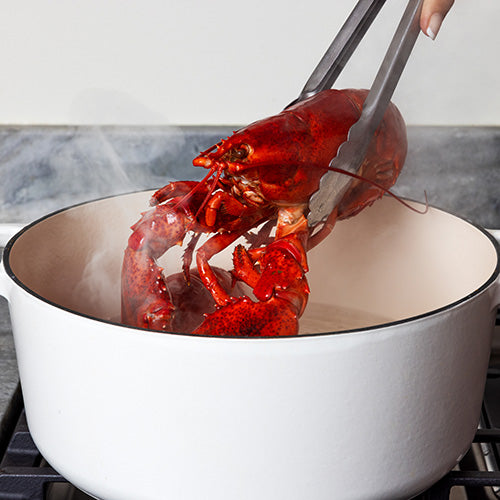
- Bring the water to a rolling boil. Lower the lobsters in carefully with tongs. Avoid crowding the pot.
- Wait for the boil to return. Start timing then and use the weight chart as a starting range.
- Check tail and claws. Measure the thickest meat, avoiding the shell. Each should reach 145°F and look pearly and opaque.
- Remove and serve. Lift the lobsters out promptly and let them cool enough to handle before cracking.

Watch the technique
Watch: boiling live lobster
Follow our original demonstration with Vanessa Seder, then use the written weight chart and doneness checks above.
Watch the original MLN video ↗steam
How to steam live lobsters
Preparation: whole live lobster above the water · Start the timer: when added to the steaming pot and covered
- Set up the pot. Add approximately two inches of water and place a rack or basket above the waterline. Add sea salt if desired.
- Bring the water to a rolling boil. Have the lid ready and make sure the pot is producing steam.
- Add the lobsters and cover. Place them on the rack with tongs, cover tightly and begin timing. Maintain enough heat to keep steam circulating.
- Use the steaming column. Check before the estimated finish time. Do not substitute the shorter boiling times. If the pot loses steam after adding the lobsters, allow time for heat to recover.
- Check and remove. Measure the thickest tail and claw meat. Cook to 145°F with pearly, opaque flesh, then remove carefully and cool enough to handle.

Watch the technique
Watch: steaming live lobster
See the steamer setup and handling technique with Vanessa Seder. Use the steaming times in the updated chart, and check the tail and claws before serving.
Watch the original MLN video ↗How to boil jumbo live lobsters
Large lobsters need a larger pot and separate checks for the tail and both claws. Weight alone does not tell you how thick each piece is.
- Use enough water to cover the lobster without crowding it. Bring the water to a rolling boil, add the lobster carefully and wait for the boil to return.
- Measure the tail and both claws independently. Insert the probe through the softer membrane into the thickest meat, avoiding air gaps and the shell.
- If the tail reaches 145°F before the claws, remove the lobster, separate the cooked tail carefully, and return underdone claws to the pot until their thickest meat reaches 145°F and is opaque.
- Use suitable tools for thick shells and let the cooked pieces cool enough to handle.
Jumbo lobsters vary widely in thickness. Check the tail and both claws instead of relying on one finish time for the whole lobster.
How to grill a whole lobster
Whole-lobster grilling involves careful preparation and separate cooking of the tail and claws. For an easier first grilled lobster dinner, use our split lobster-tail grilling method.
- Prepare and split the lobster on a stable cutting board, or have a seafood professional prepare it. Separate the claws so you can check them independently.
- Remove and discard the tomalley, stomach and intestinal tract. Keep those organs out of sauces and picked meat.
- Heat the grill for medium direct cooking, with a cooler area available. Brush the exposed meat with oil or butter; keep serving butter separate from raw seafood.
- Grill the tail and claws, turning as needed. Move pieces to the cooler area if the exterior browns too quickly.
- Check every piece separately. The thickest meat must reach 145°F and look pearly and opaque. There is no single reliable time for all whole-lobster sizes.

Maine DMR advises against eating lobster tomalley; the advisory concerns the digestive organ.
Dinner is ready
Crack, serve and enjoy
Take the lobster out of the hot water or steam promptly and let it cool on a clean tray until you can handle it. Serve with melted butter and lemon.
Watch Julian crack a hard-shell lobster, then use our ten-step photo guide to get the claw, knuckle and tail meat.
Watch Julian’s original video ↗
How to crack a lobster →Refrigerate leftovers within two hours, or within one hour above 90°F. Use shallow containers for cooling. Reheat leftovers to 165°F.

Live-lobster cooking questions
Is boiling or steaming better for a first lobster dinner?
Either works. Boiling is straightforward if your pot can cover the lobster with water. Steaming uses less water and keeps the lobster on a rack. Choose the setup you have, then use the matching chart.
When do I start the timer?
For this boiling method, start after the water returns to a boil. The steaming reference starts when lobsters are added to an already steaming pot and the lid is closed. Maintain steam, and account for slow heat recovery.
Is a red shell enough to tell me it is done?
No. A shell can turn red before the center is cooked. Check the thickest tail and claw meat for 145°F with pearly, opaque flesh.
Do two lobsters take twice as long?
No. Use the weight of each lobster, not the combined weight. Crowding and slow heat recovery can add time; cook in batches if needed.
Should I remove the claw bands?
Keep your hands clear of the claws. If you choose to remove bands before cooking, use suitable tools and do so immediately before lowering the lobster into the pot.
Can I use this chart for frozen tails?
No. Whole live lobsters and frozen lobster tails need different preparation and timing. Use the lobster-tail cooking guide for tails.
Cooking references
- Maine Lobster Now’s established live-lobster boiling instructions and original demonstrations
- Maine Lobster Marketing Collaborative: whole-lobster steaming chart
- FDA: seafood cooking and handling
- Maine DMR: tomalley advisory
