
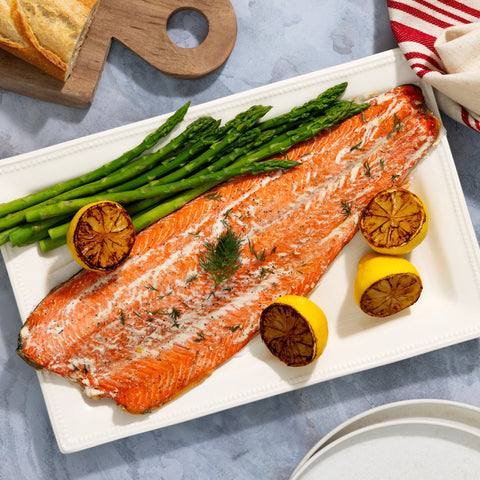
Wild Caught Alaskan Sockeye Salmon Fillet - 1.25 lb.

-20%
Frozen

Sustainably Sourced
Premium Whole Fillet
Vacuum-Sealed
Skin-On / Boneless
Wild-Caught in Alaska
Species: Sockeye salmon (Oncorhynchus nerka)

Regular price $39.99 Sale price $49.99

Wild Alaskan Sockeye Salmon Fillet — 1.25 lb Average

Our sustainably sourced sockeye salmon is wild-caught in Alaska, with a rich flavor and vibrant red color. This whole fillet averages 1.25 lb and is boneless with skin on, vacuum-sealed and supplied frozen.

Sustainably Sourced Alaskan Sockeye

Alaska’s fishery managers monitor salmon returns and adjust fishing openings and harvest levels to allow enough fish to return to freshwater and spawn.

Follow the product’s refrigerator-thawing and packaging instructions before cooking. Grill, bake or pan-sear whole, or divide the fillet into portions for your recipe.

WARNING: Consuming this product can expose you to chemicals including lead which is known to the State of California to cause cancer and birth defects or other reproductive harm. For more information go to www.P65Warnings.ca.gov/food.

Our sockeye salmon is sustainably sourced and wild-caught in Alaska. Alaska’s fishery managers monitor salmon returns and adjust fishing openings and harvest levels to allow enough fish to return to freshwater and spawn.

Our recommendation is to serve one 8 oz. fillet per person with your favorite fish and seafood appetizers and side dishes.

The Health Benefits of Salmon

Seafood is widely regarded by medical experts and dieticians to be healthy, providing nutritional benefits not found in other meat sources. While salmon is often widely publicized for its health benefits, in general, most fish species are also low in calories and fat, but high in protein, vitamins, and minerals.

Sockeye Salmon is often included on lists of the best “superfoods” you can find and for good reason. A 3 oz. serving of salmon contains just 60 calories and 10 grams of fat, while offering a whopping 17 grams of protein.

Maine Lobster Now offers next-day delivery for orders placed Monday through Friday by 8AM ET, with delivery available Tuesday through Saturday. Saturday deliveries may require an additional fee and are subject to availability. Orders are shipped with dry ice or gel packs to ensure freshness. Shipping may be affected by holidays or weather conditions. Customers are encouraged to inspect their package upon arrival and report any issues immediately with photos. For more details, refer to their shipping policy.

View our shipping policy

Simple Instructions for Storing and Thawing Salmon

Storage: Keep frozen ≤ 0℉ (-18° C). Vacuum-sealed fish held under these conditions should retain their quality for at least 6 to 12 months. Lean white fish (halibut, cod) generally have a longer freezer life than fatty fish (salmon, tuna, sablefish). It is important to note seafood stored in frost-free freezers should be used within 3 months.

Thawing instructions: Thaw under refrigeration ≤ 38℉ (3℃). Before thawing, puncture or remove packaging. For quick-thawing, place frozen fish in cool water for approximately 20 to 30 minutes, just until contents are flexible. Once thawed, immediately cook or refrigerate (if refrigerating, puncture the package). Regardless of the chosen thawing technique, once the product is thawed, it should be cooked within 24 hours and stored at a temperature no higher than 38℉ (3℃).